
When Lee Bowes, 45, from Middlesbrough, was presented with an opportunity to trial a controversial psychedelic treatment in Mexico last December, he felt he had nothing to lose.
He said he had already exhausted the local mental health services available to him over the last seven years because of built up trauma and several major physical injuries he had sustained.
A phone call with former MMA fighter, Ian McCall, founder and CEO of an organisation called Athletes Journey Home, introduced Lee to the psychedelic plant medicine ibogaine.
Lee said: “I’d never heard of it before, but when I looked into it, it lit a fire inside me of hope. I was desperate to go and try it.”
Events that contributed to Lee’s struggles with mental health and addiction
When he was 13, his girlfriend, who he described as “my first love”, was tragically murdered in her classroom at Hall Garth school- now known as Outwood Academy Acklam.
Lee said: “Looking back, I didn’t realise then what I do now. That was the beginning of what nearly became the end for me.”
Lee was a keen sportsman from an early age but said a sequence of events led to him turning his back on a promising athletic career.
He added: “I became an elite boxer. One of the best in the country. I had my whole life set up for me.
“Unfortunately when I was 18, my mam, my hero, passed away.”
As the oldest child of four, Lee was left to bring up his younger siblings. That meant leaving his mechanical engineering apprenticeship to get a job that provided for the family.
The final nail in Lee’s professional boxing career came after a bleed to the brain left him needing surgery following an attack.
The incident also left him requiring 58 staples in his head and, at one point, he was given only 24 hours to live.
Lee said: “My life story speaks for itself really.”
After Lee’s boxing career ended, he started to experience anxiety attacks. “Being a boxer, I put depression to the side, I refused to accept it,” he said.
At this point, Lee said he had been prescribed about 15 tablets a day and began to self-medicate with drugs and alcohol.
“I was nothing, I was a shell of a man,” he said. “I lost my identity completely and became a bit of a recluse.”
Lee said he tried everything available to him – therapy, medication, Alcoholics Anonymous, Narcotics Anonymous – but none of it worked.
After talking to an ex-rugby player in his local community centre in Saltersgill, who was already part of the cohort of elite athletes who suffer from traumatic brain injuries going to Mexico for the ibogaine trial with Athletes Journey Home, Lee was put in touch with Ian.
Lee’s ibogaine experience in Mexico
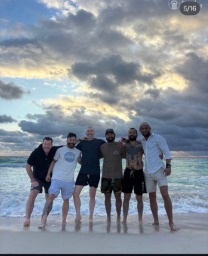
Lee said before he went to Beond, the treatment facility in Mexico, all his medication had to be stopped and out of his system.
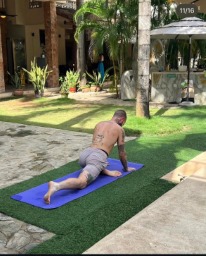
He spent eight days at the Cancun rehabilitation centre, where he received therapy and coaching from trained staff.
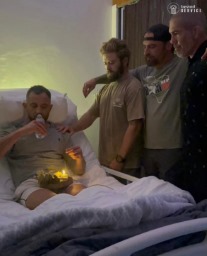
When it was time to take ibogaine, Lee said he was hooked to a heart monitor. The drug has previously been associated with irregular heart rhythms, which can be fatal if left untreated.
Lee said how important it is for the treatment to be administered within a facilitated environment because of the risks associated with ibogaine, which is a naturally occurring psychoactive compound found in the roots of the African shrub, iboga.
It has long been used for medicinal and ritual purposes in West Central African countries such as Gabon, Cameroon and the Republic of Congo.
It is currently only legal in a handful of countries, including, Mexico, Brazil, New Zealand, South Africa and Canada, where it is often used in specialised addiction clinics.
Describing his experience taking the drug, Lee said: “When you take it, it’s like a little ceremony. Then you go off into your experience.”
Since returning to Middlesbrough, Lee said ibogaine has given him his life back and taught him to look at things with a different perspective, though acknowledged that the treatment was “hard work”.
“It’s no holiday – ibogaine was a groggy experience,” he added.
“Since I had it in December, I feel like I’m only four months old. I’m excited about the future. Everything seems to align now.”

Lee’s ayahuasca experience in Peru
Due to the positive impact Lee felt ibogaine had on his life, he decided to continue his journey with alternative medicines.
In March, he went to a retreat in Peru organised by Athletes Journey Home. He took part in an ayahuasca ceremony in the Amazon jungle, guided by an experienced shaman.
Ayahuasca is a psychoactive brew originating from the indigenous cultures of the Amazon rainforest regions.
For centuries in countries such as Peru, Brazil, Colombia and Ecuador, it has been used by shamans for spiritual and healing rituals.
It is not legal in many countries outside of South America, though legal retreats operate in countries like Spain and Portugal.

Lee said he found his ayahuasca experience to be much harder than his ibogaine treatment.
He said: “It was possibly the most difficult but rewarding experience I’ve ever had.
“It took me back to face the demons I’d tried to bury away deep in my heart and in my childhood.”
Lee said he followed the correct diet, advice and protocols before and after going into the jungle. He said he put the hard work into the treatments, to change his mindset.
He said: “Holistic medicine hasn’t just reset me from my addictions – it took me beyond that to unravel all the emotions and trauma that had me drowning like a sinking ship.
“It’s given me clarity and I now see a beautiful horizon ahead.”
Lobbying to change UK legislation
Lee is hopeful the UK will follow in the path of American President, Donald Trump, who last month signed an executive order to fast track research and improve access to psychedelic drugs, with a major focus on ibogaine, as promising treatments for serious mental illnesses.
Lee believes there needs to be a discussion surrounding psychedelic drugs and the use of holistic medicine in the UK to support our health system.
He plans to go to London in July to be part of lobbying for change. He wants the government to consider the potential therapeutic benefits of ibogaine when conducted under on-going medical supervision.
Experts divided
Some experts recognise the potential for the use of psychedelic substances to treat mental health issues when conducted as part of a proper clinical trial, while others warn against the dangers of taking these kinds of drugs at retreats.
A study at Stanford University, California, carried out on 30 veterans of U.S. special forces, suggested promising results for ibogaine when it was published in 2024.
Researchers at the university have discovered that, when combined with magnesium to protect the heart, ibogaine “safely and effectively reduces PTSD, anxiety and depression and improves functioning in veterans with traumatic brain injury”.
While early observational studies and a growing number of clinical trials of the drug have been described as encouraging, concerns about safety, particularly its impact on heart function, have limited its broader clinical use.
Sudden deaths have been reported in individuals undergoing ibogaine therapy, with 33 ibogaine-related deaths publicly reported between the years 1990 and 2020.
Professor Samantha Weston, Director of Pharmacy at Teesside University, said although she has not studied ibogaine or ayahuasca, she has a research interest in Complementary and Alternative Medicines (CAM).
She said: “It has always been bubbling away underneath the surface and it’s kind of impacted the way I have designed the new pharmacy course here at Teesside Uni.”
The CAM side of her research has focused on Islamic medicine systems, traditional Chinese medicine and ayurveda, a holistic healing system originating in India thousands of years ago.

Professor Weston said: “I think there is a real move towards thinking differently about medicine in the UK. The supplement markets are huge.”
She believes the move towards a more holistic approach to medicine could be due to a degree of distrust and dissatisfaction some individuals have with the current UK healthcare system.

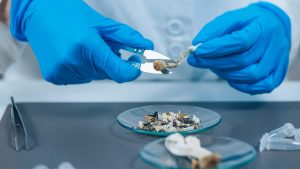
Professor Weston, who has previously studied the treatment of epilepsy using chemicals from the cannabis plant, said psilocybin – commonly known as magic mushrooms – is now under clinical trials for severe mental health conditions in the UK.
She said: “There’s some evidence there- it’s just so trippy that people don’t want to licence them.
“It’s still a little bit frowned upon, because we are a little bit mainstream.”
If you’ve been affected by the issues in this story, help is available. For support with mental health issues, visit Mind online, or call 999 in the case of emergency.