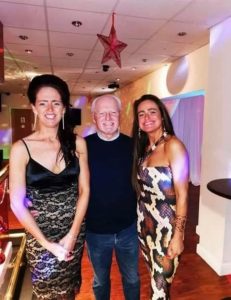
After watching her mum and her brother bravely battle with Huntington’s disease, Vicki McCabe knows only too well the road she faces with her terminal illness.
Often described as one of the cruellest and most devastating diseases, Huntington’s is commonly characterised by the worst aspects of dementia, Parkinson’s and motor neurone disease combined.
A relatively rare disease, although more common in European countries than countries in Asia or Africa, Huntington’s currently has no cure.
A recent breakthrough in research last September revealed promising results, dramatically slowing down the progression of the disease.
Vicki, 46, from Middlesbrough, is aware this breakthrough has sadly not arrived in time to help her – but she is hopeful for what it could mean for people living with the disease in the future.
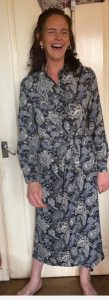
When Vicki was about 10, she thought her mum’s boyfriend was lying to her as she recalls the cruel way he said to her: “Your mam’s gunna die”.
Vicki said: “What sort of way is that to talk to a young kid?”
She said at the time she didn’t really understand what he was talking about and, when Huntington’s disease was later mentioned, she didn’t know what it was.
Vicki remembers being about 20 when her mum passed and, like most people with Huntington’s, it was not the disease itself that directly ended her life. According to Vicki, she choked – a common cause of death, especially in advanced stages.
Despite Huntington’s being rare, the disease runs through families and, if one parent has it, there is a 50% chance their child will inherit it.
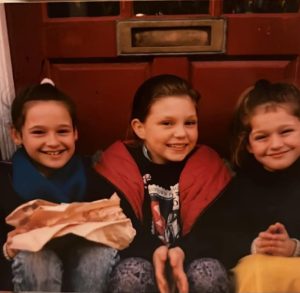
Vicki was again devastated when she lost her treasured brother Wayne at the beginning of 2021, around 13 years after his first symptoms began to appear.
Vicki said, unlike Wayne, who she says was in denial about his illness, she chose to get tested for the disease- a decision which she says she now regrets.
Previously enjoying an active social life in the pubs and clubs both locally and out of town, when her illness was in the early stages, she recalls how she was refused entry on several occasions, with bouncers telling her she was “too drunk”.
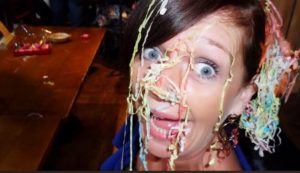
Vicki said she used to carry a card from the doctor which stated her illness and bullet points of some common side effects, one including “appearing intoxicated”.
Despite the card and an explanation from herself and her friends, she said how “embarrassing and degrading” it was not being believed and to be turned away anyway.
Vicki said she no longer has this problem now she is in a wheelchair- in fact she said she is often given the “VIP treatment” because “that’s what I am darling”.
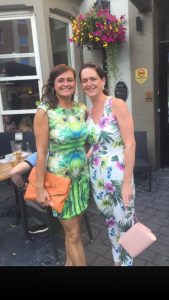
It was in those early stages she also remembers feeling paranoid walking to the local shop or doing the school run.
Vicki said: “There are loads of people addicted to crack and heroin near me. I was very skinny, I stumbled when I walked and my speech had started to slur.
“I was paranoid people would think I was an addict, so I started staying in the house more and didn’t like to go out on my own.”
Vicki, who is mum to one grown-up son and another boy in his final year at school, also blames the breakdown of her marriage on the ruthless disease. After 25 years together, Vicki’s then partner and younger son’s dad, proposed to her. They married in August 2019.
Vicki said her happily-ever-after was destroyed when, “Two months and nine days later he said he couldn’t do it. He was leaving me.”
Although she says her ex-husband never gave her a reason for his decision, she is convinced it is because he didn’t want to be tied down caring for her as her disease progressed.
She said: “He married me because he felt like he had a duty to and to give me a special day to remember.
“But it’s not a special memory. I think he thought he was doing the right thing, but he wasn’t. He should never of asked me to marry him. In sickness and in health. What does that mean?”
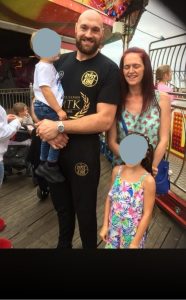
Vicki has since moved from her house in North Ormesby to a dormer bungalow nearby to better accommodate her needs.
Carers visit her home four times a day to administer medication. Vicki’s social worker put this plan in place a few years ago, after she took an overdose because she “wanted to end it all”.
Vicki gets on well with most of her carers and she mentions one who understands exactly how she wants to be treated.
The two women call each other every name but their own- exactly the type of banter Vicki said she loved having with people before she became ill.
She said: “I was like this before I got bad so there’s no point changing now is there.”
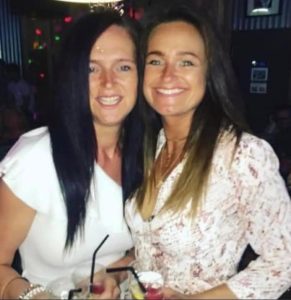
Although presenting a remarkably positive outlook in the face of adversity, Vicki was typically blunt and candid when describing the impact the disease has on her daily life.
“It’s s***,” she said. “I can’t do nowt.”
Vicki experiences short-term memory loss, along with difficulty sleeping. She is unable to perform daily tasks such as cooking and cleaning and is now unable to leave the house alone – relying on a wheelchair and friends, family or carers to take her out.
Vicki finds every opportunity to find the humour in life and said: “It’s funny winding up my mates and the carers when they take me to the shop.
“I scream and shout dead loud so other shoppers think they’re hurting me.
“The staff in my local shop are used to it – but people’s faces when we go to a big shop look disgusted. You can tell they’re trying to decide if they should say something or not. It’s funny as.”
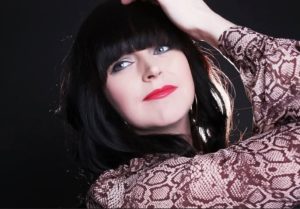
Vicki struggles to maintain a healthy weight despite her prescription of nutritional shakes and eating takeaways most nights.
Her weight loss is not helped by the involuntary, jerky, uncontrollable movements she constantly suffers. She said a doctor has told her it is like she is “running a marathon every day”.
Vicki said the only part of her body that she is unable to move is her middle finger on her right hand, which she describes as a “nightmare- because it’s my favourite finger to use”.
Her friends joke that this intermittent loss of use is because it is overused and needs a break.
Vicki said: “I’ve always been a funny lass. I might struggle speaking now but I’m still funny as. Better to have a laugh than be boring.”
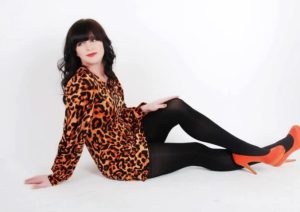
Professor Ed Wild, along with Professor Sarah Tabrizi, led the UK part of the recent trial. They are both optimistic about what it could mean in the future and believe we have “reached the beginning of the end”.
Data from the trial showed the disease was slowed by 75% in participants – meaning the decline people with Huntington’s currently experience in one year, would take four years after treatment.
Professor Wild said: “This result is the good news we’ve been working and waiting for. Not just a treatment that slows progression of this terrible disease, but one that does so with truly stunning effectiveness.
“It is nothing less than the dawn of a new age for families impacted by Huntington’s disease.”
Professor Tabrizi said: “It offers long-awaited hope to individuals and families impacted by this devastating disease.”
With the treatment not ready to be licensed in Europe any time soon and Vicki’s condition advanced, the breakthrough will sadly come too late to save her.
Professor Wild, who has dedicated 20 years to studying the disease, said: “We must now work no less diligently to turn this breakthrough into something that benefits everyone who needs it.”