
Experts at Teesside University are developing a method of turning orange peel into a material capable of repairing bone or skin tissue.
The project, which remains in its very early stages, originates as a collaboration with a Greek university, Aristotle University of Thessaloniki.
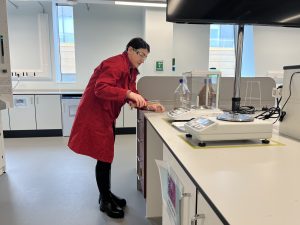
One of the researchers leading this scheme, Dr Maria Dimopoulou, describes it as a ”perfect example” of how environmentalism and innovation can come together to source benefits for human health.
Dr Dimopoulou said an ultrasound technology is used to retrieve a dietary plant fibre, known as pectin, from dried, ground orange peels, helping to preserve its natural properties. After this, the substance is mixed with water and ethanol so the pectin can be extracted as a soft solid. Once formed, this is dried and later assessed for its suitability for biomedical use.
However, these efforts go beyond just a lab study and emerge as part of a local sustainability drive, which seeks to take action against climate change.
Professor Dawid Hanak, an expert in decarbonisation at the university’s Net Zero Industry Innovation Centre, said: ”Sustainability is central to Teesside University’s mission to transform lives and economies in a region built on industry and now leading the net-zero transition.”
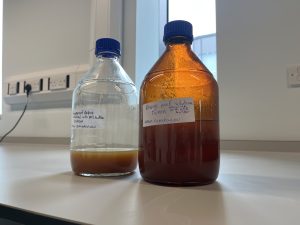
Dr Dimopoulou frames this mission as central to cutting greenhouse gas emissions.
“The food that is being wasted emits CO2 because sometimes it is used as a fertiliser or it goes to landfill. she said.
”And also, imagine the food that is being wasted – how much land, how much energy, how much water is being wasted at the same time?”

I’m Jey, a journalism student at Teesside University and the current head of news for the TUXtra website. Following a background in economics and geography, I hope to cover a wide-range of topical issues!