
The UK’s first by-election of 2026 took place in the Greater Manchester constituency of Gorton and Denton last Thursday. This saw the Green Party’s Hannah Spencer dethrone Labour in a constituency they had held for nearly 100 years. But what does this surprise result mean for Tees Valley and the greater national picture?

The working-class area of Gorton and Denton was previously represented by Health Minister Andrew Gwynne, who had resigned on health grounds after being suspended for allegedly insulting constituents and fellow politicians. The constituency shares notable parallels with the industrial region of Tees Valley. Both areas are rooted in a history of manufacturing and fall within some of England’s most deprived communities.
According to government data, the Manchester half of Gorton and Denton is one of the poorest in the country, with certain districts in Teesside, like Middlesbrough and Hartlepool, sharing the same stark reality.
Considering these similarities, Labour member and Middlesbrough councillor Theo Furness has labelled the result as a huge ”wake-up call”, urging his party to be increasingly radical and speak to more people on the doorstep.
”No Labour government has kept their position without making big changes,”said Furness.
He also expressed his worry for Middlesbrough’s local election which is set to take place in May 2027. The Park Ward councillor believes much of the voting in authority elections is heavily based on sentiment towards national government and their policy changes, rather than the local activity.
On the other hand, members of the South Tees Green Party (STGP), which covers various constituencies in the Teesside area, see the result as a hopeful foundation for both local and national efforts.
Rowan McLaughlin, a representative for STGP, said: ”We have gone from having a steady 120 members for the last decade to 400 members in the last month, so hopefully we’ll be in a position to really put up a fight at our local elections in 2027.
”We don’t just hope for a better world, we get out there and make it happen.”
Darlington Borough Council, in the western part of the Tees Valley authority, appears the most promising for a Green Party surge in the upcoming council elections. Green member and Darlington Councillor Matthew Snedker says the aim is to become the largest group on the council, a position that could provide optimism for securing a future majority.
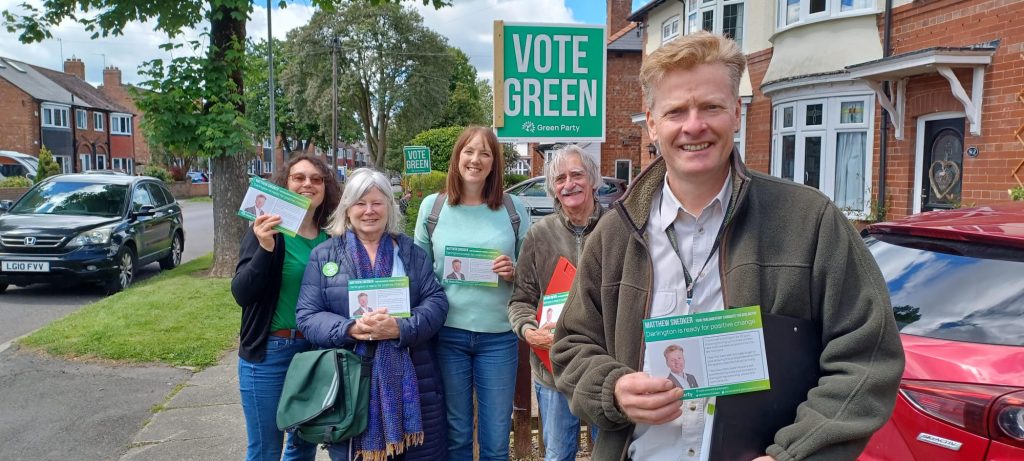
He argues that Spencer’s win in Greater Manchester could mould the future for British politics, replacing the decades-long Labour-Conservative dynamic with a battle he calls ”grafters versus grifters”: Polanski’s Green Party versus Farage’s Reform UK.
Various Reform UK councillors across Teesside were contacted. The only response came from Hartlepool Borough councillor Amanda Napper, who said: ”I don’t think we are going to have any problems in Hartlepool.”

I’m Jey, a journalism student at Teesside University and the current head of news for the TUXtra website. Following a background in economics and geography, I hope to cover a wide-range of topical issues!