
Former Teesside University student, Lewis Denison, was recently nominated for not one, but two Royal Television Society (RTS) Television Journalism Awards – ‘Emerging talent of the year’ and the ‘Digital Journalism award’ for ITV Politics TikTok.
The awards are known as a gold standard achievement in the television industry.
Lewis Denison who studied multimedia journalism at the University now works as a social media politics reporter for ITV News and does TV reporting for the ITV News daily bulletins.
“It was quite surreal, to be honest,” Denison said.
“Only this time 2 years ago, I was brand new at reporting. I hadn’t done anything on screen, and it was quite nice that my company, ITV, had decided to put my name forward to the awards, so that was a privilege. Then to actually get selected amongst loads of other people that entered the awards, it was quite… yeah it was a moment for me to feel proud of myself.
“In journalism, you sort of don’t really ever have those moments to reflect on what you’ve done because you’re constantly working. There’s always a new story. There’s always a new thing. So, it was nice to be appreciated.
“I mean you get that [recognition] from your bosses, but then when someone else, the RTS, says that I’m all right, then it’s quite nice.”
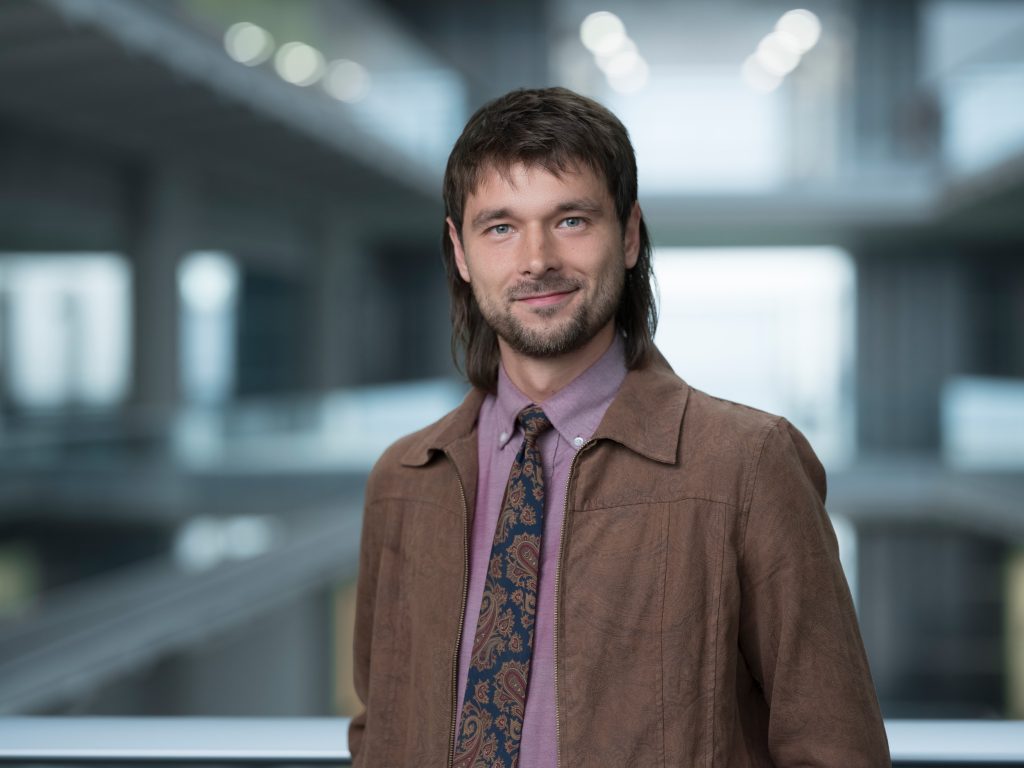
Denison has reported on several large-scale news stories, some of which he believes played a fundamental role in changing the way authorities operate.
“The biggest story I’ve worked on by far is the Partygate scandal,” he said. “When Boris Johnson’s government got accused of breaking all the coronavirus rules. And there was a video of a lady who at the time was, I think, the government’s press secretary, Allegra Stratton, and she was doing a mock press conference, and someone at ITV got hold of that footage.
“My involvement in that was writing the article that was going to be on our homepage. And it was the biggest, most well-performing article ITV, at the time, had ever done. It pretty much broke the website.
“Every week from then on, you sort of felt like the government was about to collapse, and eventually it did, and to be honest, I think it all started with that video.
“I only played a small part in that story, but I would say that’s the biggest one I’ve worked.”
Alongside this, he has also worked on two stories that have forced change, and in-turn made him proud when reflecting on his work.
The first was a story about two Ukrainian girls, a 15 and 12-year-old sibling duo, who were stuck in France after the war in Ukraine broke out. UK officials initially prevented the girls from entering the country, arguing that they failed to meet the relevant criteria. This was despite the fact their auntie already lived here.
Denison reported on this and was told by their auntie that the government had decided to allow them to come and live in the UK, and the family believed it was due to his article.
Another time, he conducted multiple stories about abuse in care homes and an old lady who was abused by her carers. Eventually, the perpetrators were arrested, and the family of the woman thanked him for his help.
Denison said: “Anytime where you’re actually able to make a difference to something outside of your own life is quite nice.”